
Ankle Fracture/Broken Ankle
An ankle fracture, also known as a broken ankle, is an injury to the joint of the lower leg called the Ankle Joint. The terms break and fracture are used interchangeably.
The ankle joint is composed of 3 bones: tibia, fibula, talus, and the ligaments that connect these bones together. This joints moves well up and down, but if the ankle twist (rotates) too much side to side, injuries can occur. Such injuries can break the bones and tear/sprain the ligaments. These injuries are often treated with non surgical methods, but sometimes surgery is needed.
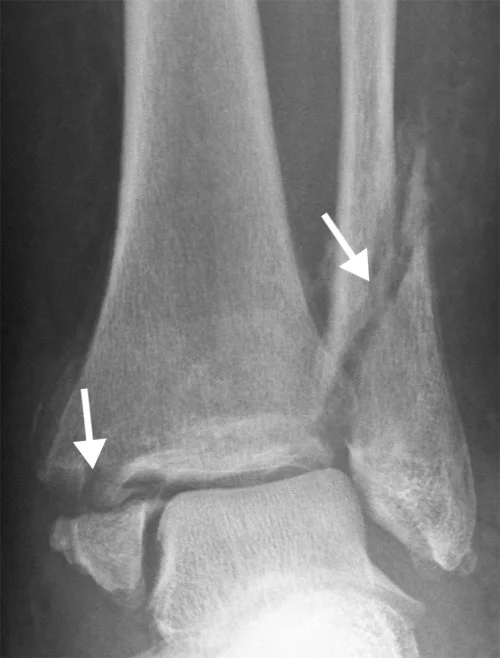
This X-ray demonstrates a “bi-malleolar” ankle fracture fracture. Bi indicated 2 bones ( one on each side of the ankle) are broken.
No matter how your Ankle is broken, being evaluated by a Board Certified Foot and Ankle Orthopedic Surgeon is imperative to insure there are not more subtle injuries or instability that should be treated too.
Understanding Ankle Fractures: Lateral Malleolus, Bimalleolar, and Trimalleolar Fractures
Breaking your ankle can be confusing, especially when you hear terms like lateral malleolus fracture, bimalleolar fracture, or trimalleolar fracture. These names describe which parts of the ankle are broken. Understanding the difference can help you know what to expect when you see an orthopedic surgeon.
The ankle joint is formed by three main bones: the tibia (shinbone), fibula (the smaller bone on the outside of the leg), and talus. The ankle also has several important bony prominences, called malleoli, that help stabilize the joint.
Lateral Malleolus Fracture
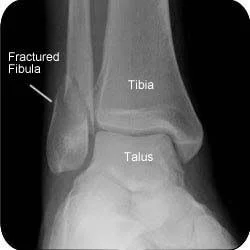
A lateral malleolus fracture is a break in the lower end of the fibula, which forms the bony bump on the outside of your ankle. This is one of the most common types of ankle fractures.
Some lateral malleolus fractures are stable and can be treated without surgery using a boot or cast. Others are unstable, particularly when the ankle joint has shifted or associated ligaments are injured. In these cases, surgery may be recommended to realign and stabilize the ankle.
Bimalleolar Ankle Fracture
A bimalleolar fracture involves two sides of the ankle. Most commonly, this means a fracture of both the lateral malleolus (fibula) and the medial malleolus (the inside portion of the tibia).
Because two important areas of the ankle are fractured, bimalleolar fractures are often unstable. Treatment frequently involves surgery to restore the alignment of the ankle and hold the broken bones in the correct position with plates, screws, or other hardware.
Trimalleolar Ankle Fracture
A trimalleolar fracture involves three areas of the ankle: the lateral malleolus, the medial malleolus, and the posterior malleolus, which is the back portion of the tibia.
Trimalleolar fractures are generally more severe injuries because the ankle joint has been disrupted in multiple locations. These fractures often require surgery, particularly when the bones are displaced or the ankle joint is unstable.
Distal Fibular Avulsion Fracture
A Distal Fibular Avulsion Fracture involves the end of the fibula bone where 2 ligaments attach. These ligaments, the ATFL and CFL, are very strong. When the ankle rolls inwards the ligaments are place under tension. This can result in a piece of fibula bone to be “avulsed” or fractured. On X-ray you will see a small broken piece of bone at the Fibular tip. This can cause a lot of pain and swelling, but fortunately is treated in a Boot. It rarely requires surgery.
Do I Need Surgery for an Ankle Fracture?
Not every ankle fracture requires surgery. The most important questions are whether the ankle is stable, whether the bones are properly aligned, and whether the ankle joint has shifted. X-rays, and occasionally a CT scan, help your orthopedic surgeon determine the severity of the injury and the best treatment.
If you have just broken your ankle, it is important to have it evaluated promptly by an orthopedic specialist. Proper treatment and alignment are important for allowing the fracture to heal and helping reduce the risk of chronic pain, stiffness, arthritis, and difficulty walking.
At Greenville's Foot & Ankle Surgery, we evaluate ankle fractures ranging from simple lateral malleolus fractures to complex bimalleolar and trimalleolar injuries and help patients determine whether nonsurgical or surgical treatment is appropriate.
Isolated Lateral Malleolus Fracture
MCS
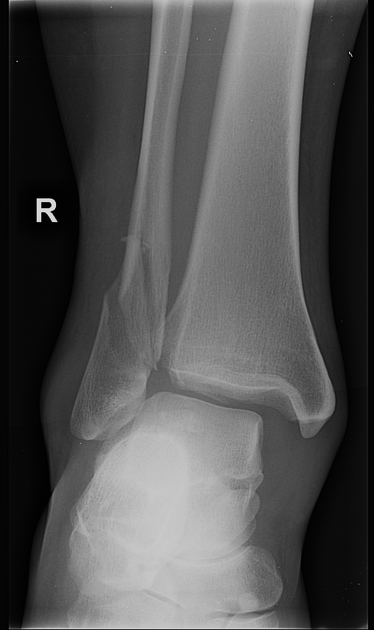
Lateral malleolus with medial instability as shown by the increase medial clear space (MCS).
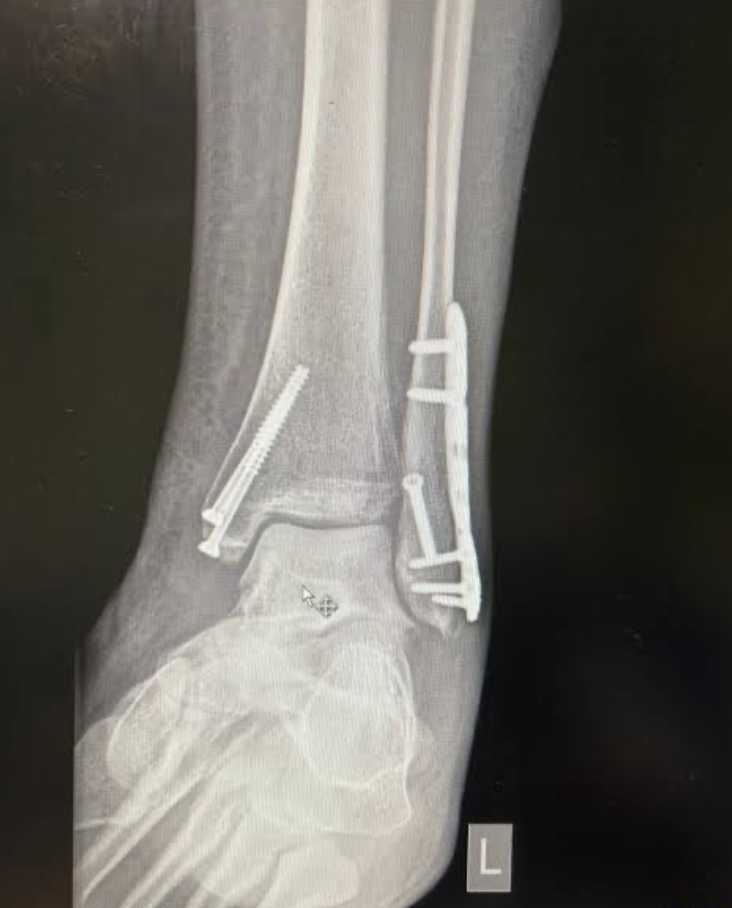
Post Surgical Xray of an ankle fracture. Plates and screws are commonly used to fix and hold the bones.
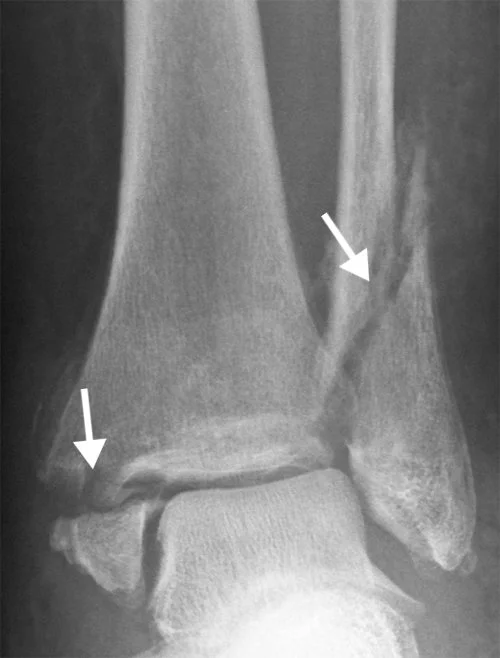
Bi-Malleolus Fracture
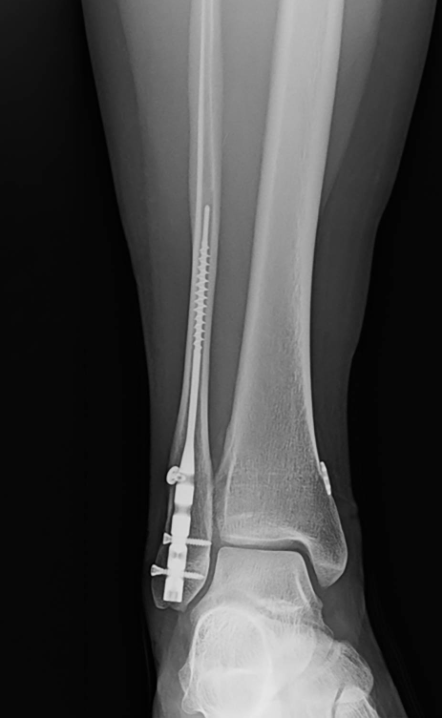
Surgical fixation of an unstable ankle fracture using a Fibular nail
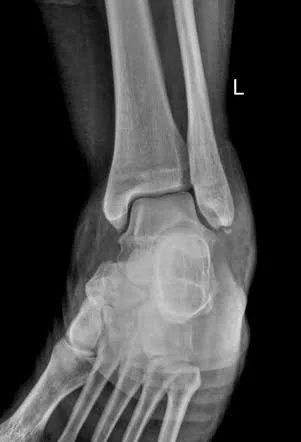
Fibula Avulsion Fracture: notice the tip of the fibula has a small fleck of bone broken off. This indicates as the ankle rolled inward a small piece of bone, which is attached to a ligament, was broken off. This is usually stable and can be treated in a boot.